

There exists a “city” built not to display prosperity, but simply to survive.
Beneath the soil of Cu Chi lies an underground network stretching over 250 kilometers — a place where nearly 16,000 people once lived, fought, and protected one another during the most brutal years of war. Not distant heroes preserved in history books, but farmers, mothers, and young people — ordinary lives who transformed darkness into the birthplace of freedom.
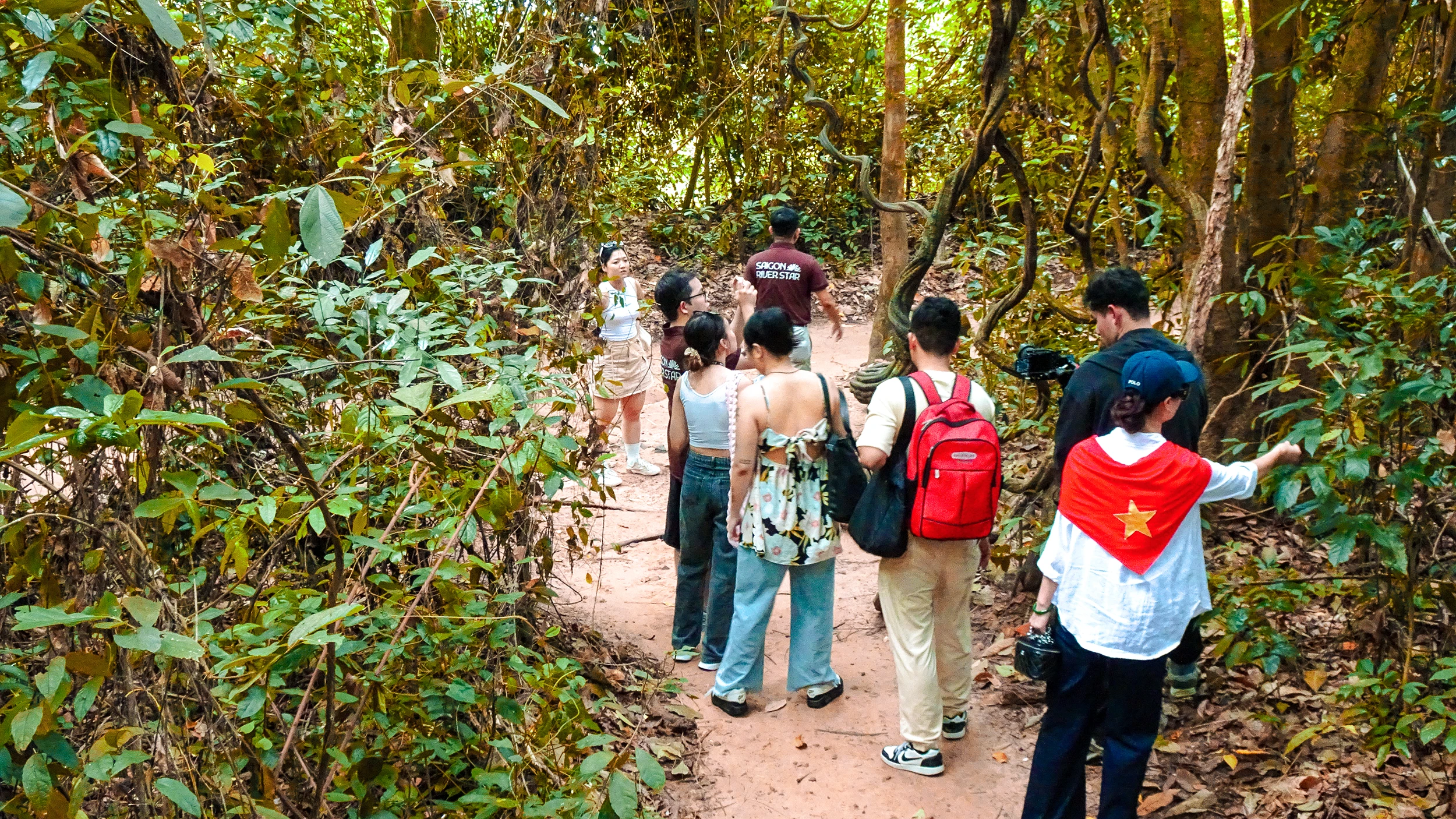
Every small chamber, every narrow tunnel bears witness to Vietnamese ingenuity and courage: when the earth became a fortress, when scarcity turned into strength, and when faith was preserved through sheer survival.
Walking through these tunnels, one no longer merely learns about history; one stands within it, touching it through silence and reverence.
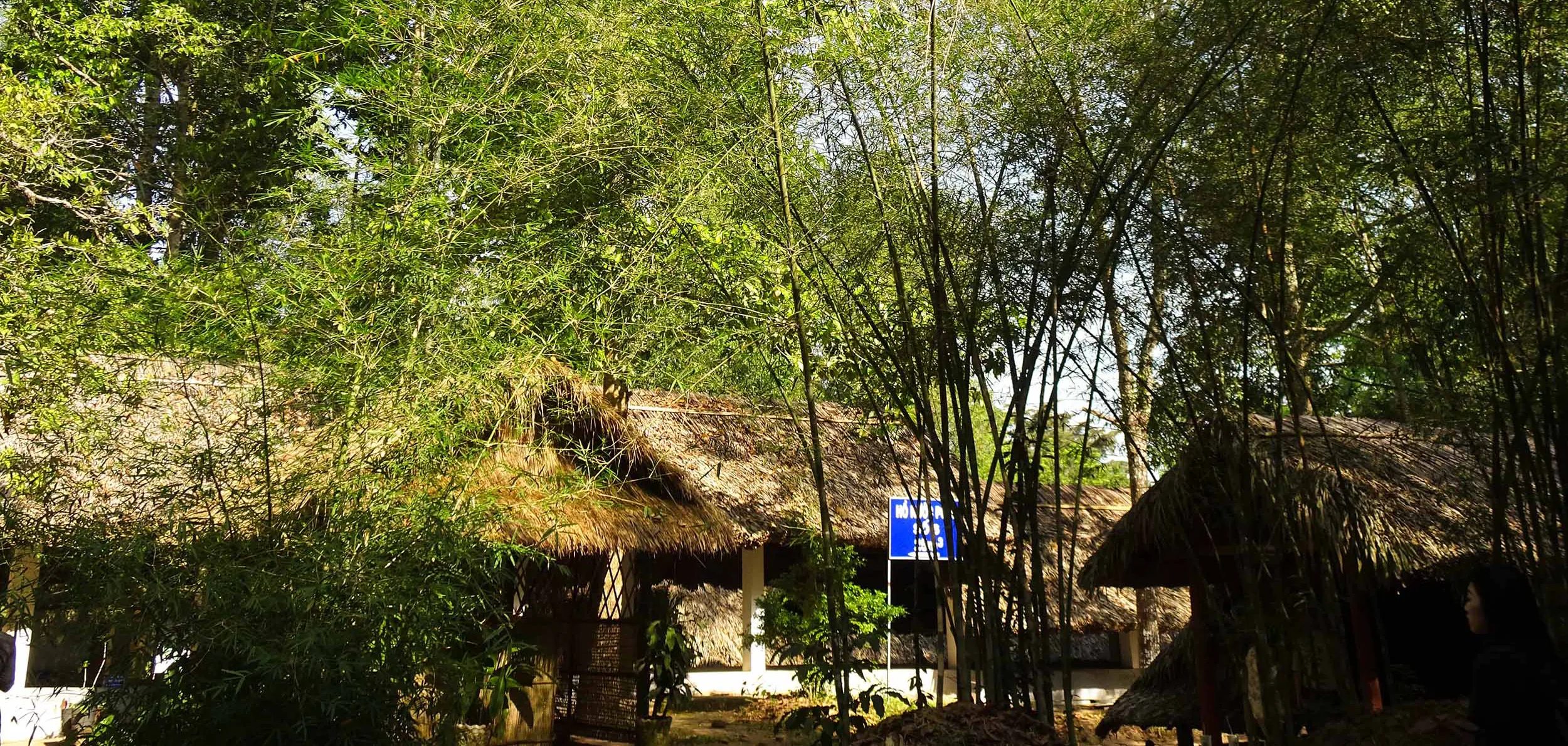
Today, Cu Chi is wrapped in quiet green. The forest is so calm that it is easy to forget this land was once a focal point of bombs and fire. And it is precisely this contrast that makes Cu Chi so profound.
.JPG)
Here, history does not shout — it whispers. On a journey with Sai Gon River Star, stories are not told through rigid timelines. They unfold through fragments of daily life:
In those moments, history is no longer something to memorize; it becomes an experience that humbles.
Cu Chi is not frozen in the past. This land is not locked away in the memory of bombs and gunfire, nor does it fall silent once the pages of history are turned. After the war, this land continued to heal through the rhythm of its people - those who chose to remain on land once torn apart by conflict, those who rebuilt their homes from ashes, and those who kept planting, nurturing, and preserving memory — not to cling to the past, but to move forward with strength and dignity.
.JPG)
In Cu Chi, history does not rest in dark tunnels alone. It lives in the bowed figures of farmers tending their fields, in the unhurried pace of postwar village life, in the way local people speak of the past — without resentment, without sorrowful lament, but with calm reflection and quiet depth.
With Sai Gon River Star, Cu Chi reveals itself not only through what was lost, but through what endures: A land of quiet resilience, where history and everyday life intertwine, where memory does not weigh heavily, but forms the foundation for gratitude in the present.
.jpg)
In Cu Chi today, visitors do not merely look back at history — they sense a spirit that still flows quietly through the land: humble, enduring, and deeply humane. And it is this spirit that makes Cu Chi not only a place that once existed in wartime, but a land that is still alive — through memory, through its people, and through a quiet faith in the peaceful days ahead.
As the boat carries you away from Cu Chi, the river drifts quietly back toward modern Saigon — unhurried, reflective.
Behind you, the tunnels disappear beneath layers of green and earth. Ahead, the city resumes its rhythm, but something within you has shifted. What lingers is not something a camera can capture; it is the weight of stories once lived underground, the silence between footsteps in a narrow tunnel, the understanding that history here was not distant or abstract — it was human, fragile, and fiercely resilient.
.jpg)
Through the journey with Sai Gon River Star, Cu Chi is no longer a place you visit “just to know”, it becomes a lived encounter with history — where moments are not rushed, where stories are given space to breathe, and where every detail, from the pacing of the tour to the voice of the guide, is designed to help you truly understand, not just observe.
And perhaps this is why Cu Chi is never just a tour: It is an experience that stays with you long after the river has carried you home.
If you are seeking more than a checklist, more than photographs, and more than surface-level stories, Cu Chi with Sai Gon River Star invites you to slow down, listen, and experience history as it was meant to be felt.
👉 Discover the Cu Chi experience with Sai Gon River Star. BOOK NOW