When most travelers speak of Cu Chi, they recall narrow tunnels and military strategy. Yet, what lies within those earthen walls was once a home, a network of spaces where families, soldiers, and entire communities lived, moved, and breathed beneath the very ground we now walk upon.
.JPG)
Hidden below the surface was an entire underground community, a carefully constructed environment where thousands of people lived for years under unimaginable conditions: narrow passageways connected sleeping quarters, meeting rooms, kitchens, medical stations, and storage spaces. Every corner was shaped by necessity, every tunnel carved with purpose.
In the absence of sunlight, people learned to measure time differently. In the silence of the underground, life adapted its own rhythm. Families shared meals of cassava and root vegetables. Children grew up learning to whisper, to move quietly, to understand danger before they understood daylight. Within these walls of earth, daily life continued — fragile, constrained, yet remarkably resilient.
Walking through the tunnels today, one does not simply “see” where people once lived. One senses how close the walls are, how heavy the air feels, and how limited every movement must have been. It is in this physical closeness that history begins to feel personal.
The story of Cu Chi is often told through the lens of heroism. But what makes this place profoundly moving is not just bravery — it is normalcy under pressure.
.JPG)
Cooking was an act of strategy: kitchens were built deep underground, equipped with smoke-dispersing chimneys that released fumes far from the tunnel entrances. A single meal required patience, coordination, and silence. Water had to be carefully collected and conserved. Medical care was improvised, often relying on limited supplies and extraordinary resilience.
.JPG)
Yet within these constraints, people still laughed, shared stories, and looked after one another. The tunnels were not merely shelters; they were spaces of community. Decisions were made collectively. Survival depended not on individual strength, but on trust and cooperation.
This is where Cu Chi reveals its quiet humanity — not through dramatic moments, but through countless small acts of endurance that allowed life to continue, day after day.
When history whispers instead of speaking
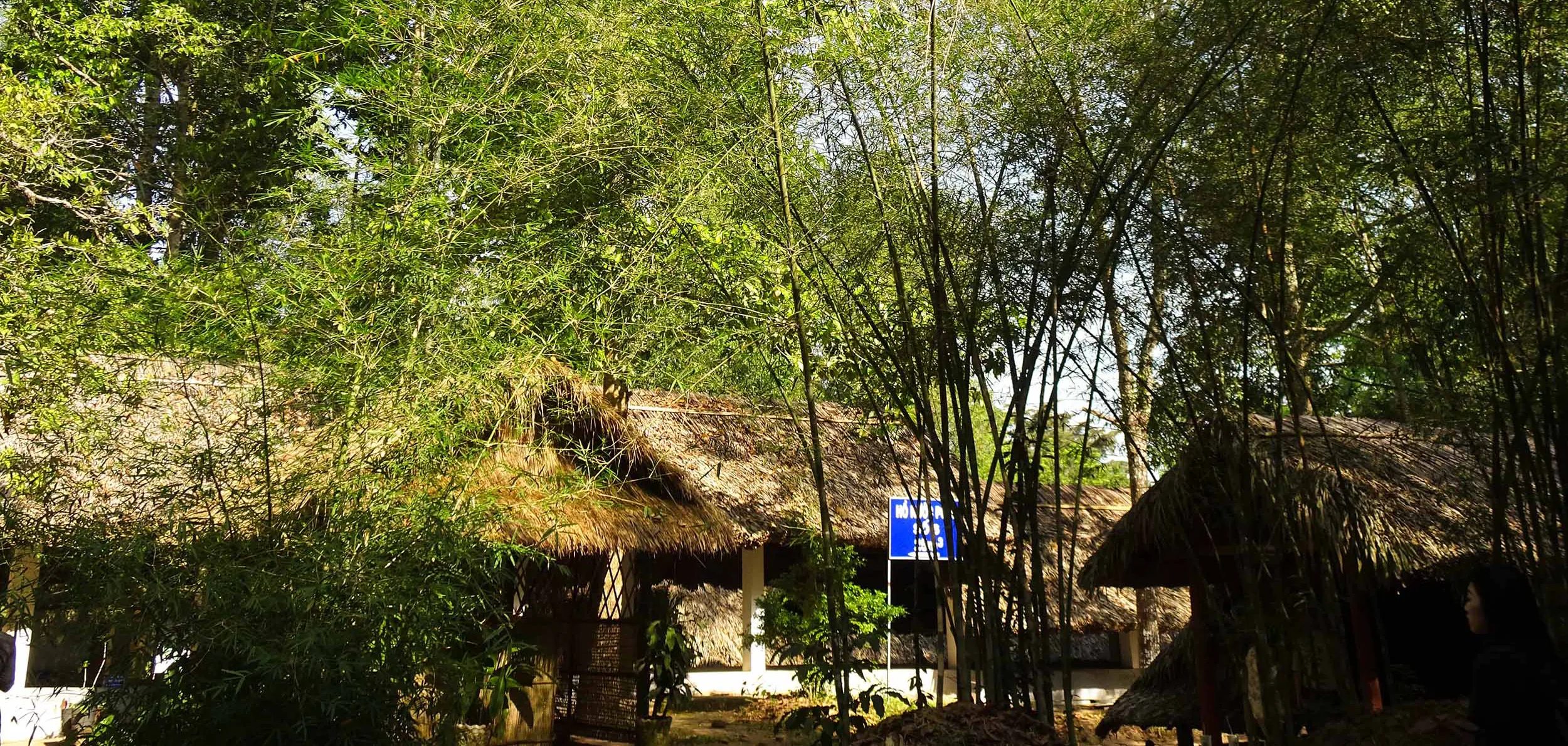
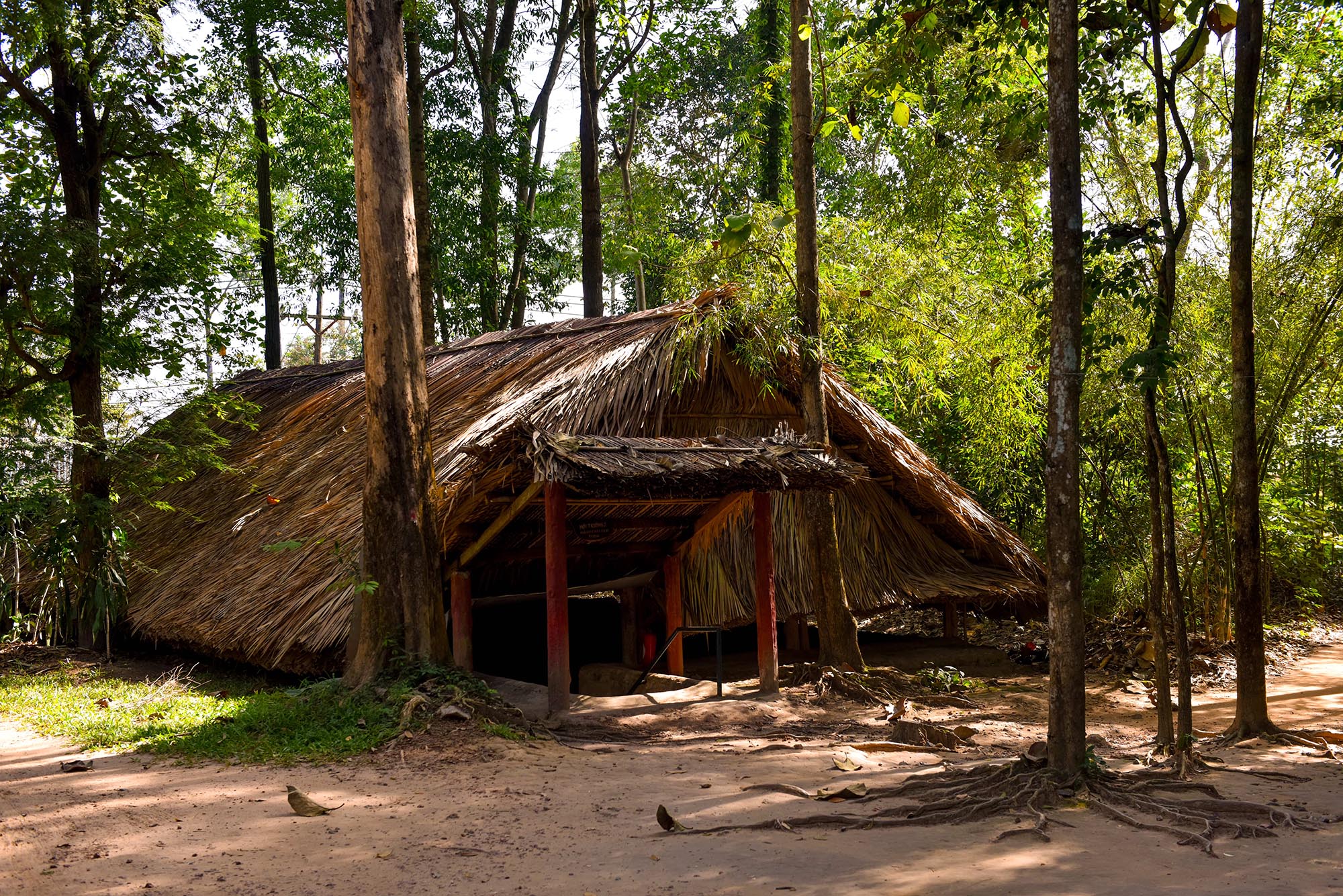
Above ground, Cu Chi today feels calm, the forest stands tall, and the soil is firm beneath your feet. It is difficult to imagine that this peaceful landscape once endured relentless bombardment.
This contrast is precisely what gives Cu Chi its emotional depth. History here does not announce itself loudly; it lingers.
With Sai Gon River Star, the journey through Cu Chi is guided not as a checklist of facts, but as a conversation. Stories unfold gradually — through the design of a ventilation shaft, the placement of a hidden entrance, the explanation of how people navigated darkness and danger without losing their sense of purpose.
Rather than overwhelming visitors with dates and statistics, our guides focus on context, helping travelers understand what it was like to live this way and why these choices mattered. For many international guests, this becomes their first intimate encounter with Vietnamese history — one that feels human rather than abstract.
Some things cannot be fully understood through books or photographs alone. Only when you stand beneath the soil of Cu Chi — as the narrow passage slowly opens before you, as the enclosed space compels you to slow down and listen to the quiet rhythm of history — do you begin to truly feel the depth of this place.
.JPG)
Sai Gon River Star brings travelers to Cu Chi not simply to “visit,” but to offer a different perspective — one where history is no longer sealed behind glass displays, but lives on through every tunnel, every pause, and every story told with care and understanding.
If you are seeking an experience that goes beyond the familiar patterns of conventional tours — a moment unhurried enough to see, to feel, and to understand — then Cu Chi, guided by Sai Gon River Star, may be where history is not just retold, but personally encountered through your own emotions.